This review is as spoiler-free as possible. Unfortunately, it’s difficult not to spoil some of the major beats of the anime. Read with caution.
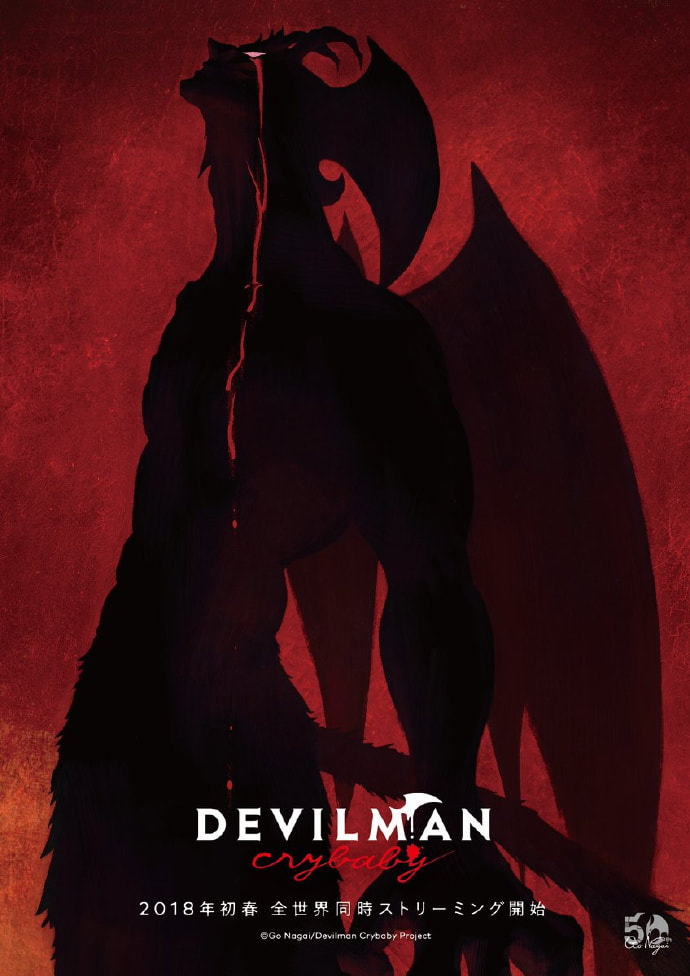
DEVILMAN Crybaby is a 10-episode Netflix original anime series inspired by the 1970s manga and anime, Devilman. The story revolves around a teenage boy named Akira Fudo, who lives a normal teenager’s life until his best friend, Ryo Asuka, informs him about demons returning to Earth to destroy it. Believing that the only way to defeat the demons is by combining a demon and human, Ryo fuses Akira with the demon Amon, giving Akira the power to eliminate the demons. However, Akira begins to realize that the demons may not be what they seem--they may, in fact, be more human than we think.
The execution of the story is incredible. I am not particularly fond of binging shows, but I just had to binge this one. The first five episodes are mainly spent developing the characters and their environment, leaving about five or so minutes per episode devoted to super violent action sequences. In the latter half of the series, more time is spent building up to the conclusion of the series. The animation can get choppy, especially during scenes of dialogue, but the action is always animated well. If you’re a fan of Elfen lied and Another, you definitely do not want to miss out. The shows sets up the kind of scenarios you just need to witness to believe, and DEVILMAN Crybaby goes above and beyond to give its dark, gritty tone purpose.
While it is very much in the style of Japanese animation, the series is not animated like your typical Shonen anime, but more in the vein of The Tatami Galaxy over DragonBall Z, which is something that might catch viewers off guard. My only issue is that mouths are sometimes drawn uncomfortably big; otherwise, the the show is packed with beautiful scenes, especially towards the latter half. I should also mention that the soundtrack is always on point; mostly synthwave with a dash of neo-classical, it’s well-suited to the anime’s mix of old and new tactics. There is an unfortunate freestyle rap by Wamu and his gang, but outside of that bizarre misstep, the soundtrack is phenomenal.
Thematically, the most important thing to focus on is the origin of the devilmen. They are created at raves, known ironically as “Sabbaths.” In the world of the show, raves are places of pure hedonism, places for humans to indulge their darkest impulses, allowing the demons to possess their bodies and lend them their powers. This is how Akira becomes a devilman. There are various other religious references as well that deepen the show’s thematic ambitions. Interestingly, the original Devilman is actually an anime and manga in Crybaby’s universe, and serves a pretty vital part in how Ryo develops.
DEVILMAN Crybaby has a lot of good things going for it, but it’s not without its cliches. Most of its character are not badly written, but only Ryo Asuka feels well-fleshed-out, with some ambiguity to his character. While his devilman forms are pretty neat, Akira’s character is as archetypal as anime protagonists get. He continually shouts out who he is and what he wants, and he cries every episode. I guess I should have expected that from the word “crybaby” in the title, but it doesn’t make it any less obnoxious. As for everyone else in the anime, none of them serve any more purpose than to progress the story, and while they do a fine job, I didn’t really care for their fates. I also wish some of the dialogue was better, especially in moments of more adult-oriented conversation.
Despite its problems, DEVILMAN Crybaby is easily Netflix’s best attempt at anime yet, and easily one of the best original shows that Netflix has to offer this year. The series improves as it goes along, balancing story and action well. The lead-up to the final two episodes is one of the most rewarding I’ve seen in anime. If you are a fan of violent, gory, and occasionally reflective anime, give DEVILMAN Crybaby a watch.
The execution of the story is incredible. I am not particularly fond of binging shows, but I just had to binge this one. The first five episodes are mainly spent developing the characters and their environment, leaving about five or so minutes per episode devoted to super violent action sequences. In the latter half of the series, more time is spent building up to the conclusion of the series. The animation can get choppy, especially during scenes of dialogue, but the action is always animated well. If you’re a fan of Elfen lied and Another, you definitely do not want to miss out. The shows sets up the kind of scenarios you just need to witness to believe, and DEVILMAN Crybaby goes above and beyond to give its dark, gritty tone purpose.
While it is very much in the style of Japanese animation, the series is not animated like your typical Shonen anime, but more in the vein of The Tatami Galaxy over DragonBall Z, which is something that might catch viewers off guard. My only issue is that mouths are sometimes drawn uncomfortably big; otherwise, the the show is packed with beautiful scenes, especially towards the latter half. I should also mention that the soundtrack is always on point; mostly synthwave with a dash of neo-classical, it’s well-suited to the anime’s mix of old and new tactics. There is an unfortunate freestyle rap by Wamu and his gang, but outside of that bizarre misstep, the soundtrack is phenomenal.
Thematically, the most important thing to focus on is the origin of the devilmen. They are created at raves, known ironically as “Sabbaths.” In the world of the show, raves are places of pure hedonism, places for humans to indulge their darkest impulses, allowing the demons to possess their bodies and lend them their powers. This is how Akira becomes a devilman. There are various other religious references as well that deepen the show’s thematic ambitions. Interestingly, the original Devilman is actually an anime and manga in Crybaby’s universe, and serves a pretty vital part in how Ryo develops.
DEVILMAN Crybaby has a lot of good things going for it, but it’s not without its cliches. Most of its character are not badly written, but only Ryo Asuka feels well-fleshed-out, with some ambiguity to his character. While his devilman forms are pretty neat, Akira’s character is as archetypal as anime protagonists get. He continually shouts out who he is and what he wants, and he cries every episode. I guess I should have expected that from the word “crybaby” in the title, but it doesn’t make it any less obnoxious. As for everyone else in the anime, none of them serve any more purpose than to progress the story, and while they do a fine job, I didn’t really care for their fates. I also wish some of the dialogue was better, especially in moments of more adult-oriented conversation.
Despite its problems, DEVILMAN Crybaby is easily Netflix’s best attempt at anime yet, and easily one of the best original shows that Netflix has to offer this year. The series improves as it goes along, balancing story and action well. The lead-up to the final two episodes is one of the most rewarding I’ve seen in anime. If you are a fan of violent, gory, and occasionally reflective anime, give DEVILMAN Crybaby a watch.
Archival details
- Original URL
- https://metallifestyle.weebly.com/curtains-movie--tv-reviews/review-devilman-crybaby
- Recovery source
- live-weebly
- Recovery date
- 2026-07-22
- Stewardship polish
- 2026-07-22
- Preservation status
- restored
- Missing assets
- None recorded
Preserved by Bloodsoaked Media · The Archives